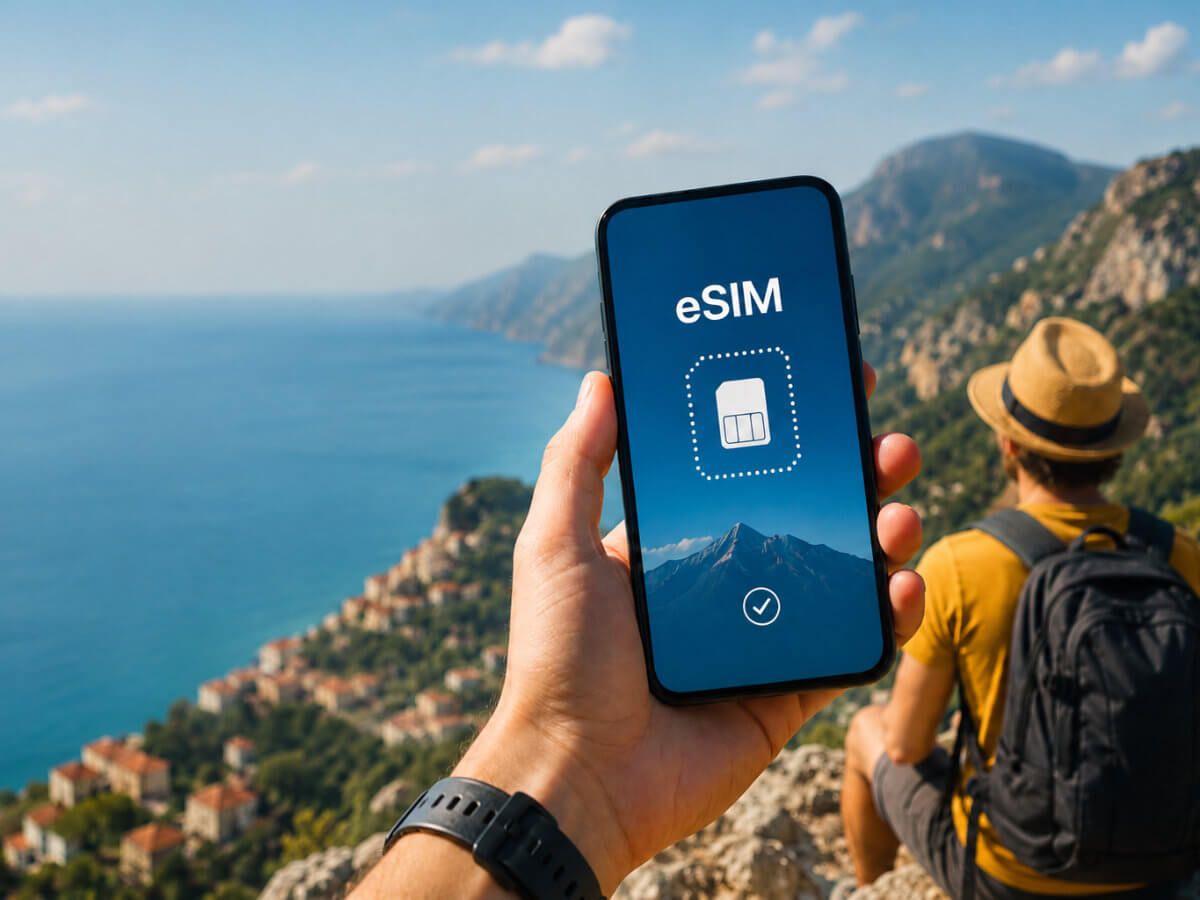
Why Travelers Are Switching Away from Physical SIM Cards
The Best International eSIM for Travelers, No Roaming Fees
Imagine landing in Tokyo and your phone instantly connects to a local network without swapping a physical SIM card. That is the power of an international eSIM, a digital SIM embedded in your device that lets you activate a cellular plan from any global carrier. You simply scan a QR code or download an app to get instant, affordable data in over 190 countries, bypassing expensive roaming fees and the hassle of hunting for local SIMs. It gives you seamless connectivity the moment you arrive, keeping you online for navigation, communication, and everything in between.
Why Travelers Are Switching Away from Physical SIM Cards
Travelers are abandoning physical SIM cards for international eSIMs to eliminate the hunt for local vendors upon arrival. Instead of juggling fragile nano-SIMs or fumbling with a SIM ejector tool, you activate a data plan from an app before you depart. This allows you to stay connected the moment you land, bypassing airport kiosk queues and language barriers. With an eSIM, you can instantly download a regional plan covering multiple countries, removing the need for separate SIM cards on a multi-stop trip. You also retain your home number for two-factor authentication via the physical SIM slot, a critical detail for banking. While the initial setup requires a QR scan, the seamless continuity across borders makes the transition a practical no-brainer for frequent itineraries. No more lost SIMs or pay-as-you-go top-up stress.
The hidden costs of roaming fees and plastic SIMs

Sticking with a physical SIM for international travel often triggers hidden costs beyond the advertised plan. Roaming fees from your home carrier can attach daily charges simply for connecting to a foreign network, even if you use no data, while plastic SIMs themselves incur shipping expenses and potential restocking fees if you cancel before activation. Furthermore, the time spent locating a local SIM vendor at your destination—and the risk of buying a plan that lacks sufficient data or expires prematurely—represents a practical, non-monetary cost. An eSIM eliminates these by allowing you to compare and install data-only plans instantly, sidestepping surprise carrier fees and the logistical overhead of a physical card.
| Hidden Cost Aspect | Physical SIM | eSIM |
|---|---|---|
| Daily roaming surcharge | Often applied per day activated | None; pay only for chosen data plan |
| Shipping & return fees | Common with mailed SIMs | Not applicable |
| Retail search time | Hunting for a local shop | Instant download from carrier app |
| Unused plan waste | Fixed term, no refunds | Flexible durations available |
How digital connectivity simplifies border crossings
Digital connectivity eliminates the need to queue for local SIMs or swap cards at a land border, airport, or ferry terminal. With an international eSIM, your device connects to a local network the moment you cross, maintaining data continuity without manual intervention. This seamless cross-border connectivity means navigation apps, messaging, and travel documents remain instantly accessible, reducing friction at checkpoints where quick access to maps or digital tickets proves essential.
- Auto-connects to regional networks upon crossing without physical card exchange.
- Preserves real-time GPS and boarding passes for immediate checkpoint use.
- Eliminates downtime between switching country-specific physical SIMs.
- Enables simultaneous local and home number access for border security inquiries.
Understanding How Embedded SIM Technology Works Abroad
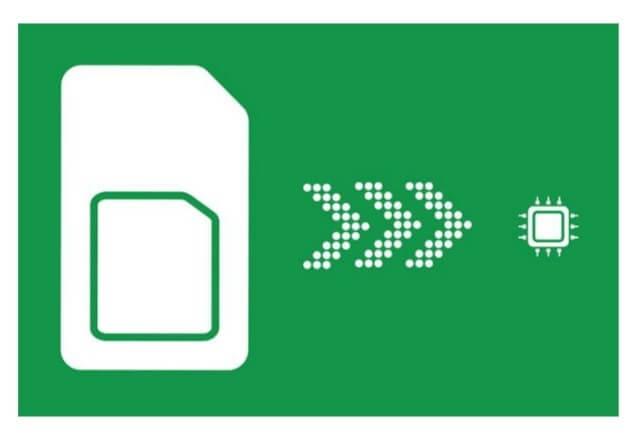
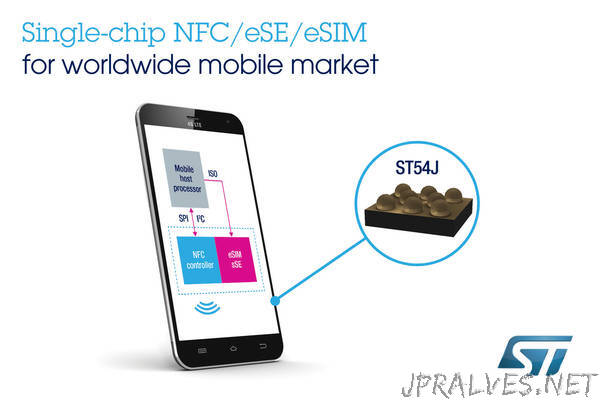
An embedded SIM (eSIM) is a tiny chip soldered inside your phone that replaces a physical plastic card. When you travel abroad, you download an international eSIM profile—a small software package containing your new number, data allowance, and network credentials—directly to that chip. Your phone then communicates with local towers through the chosen carrier’s settings stored on the profile. You can store multiple profiles and switch between them in your settings without swapping cards. A common question: «Does an eSIM work the same as a physical SIM overseas?» Yes, it connects to local networks identically—no hardware change is needed—but you must first activate the international profile via an app or QR code before boarding your flight.
From QR code activation to instant network switching
Upon arrival abroad, scanning a local provider’s QR code triggers immediate eSIM profile download and activation, bypassing physical store visits. Your device then automatically negotiates real-time network switching based on signal strength and data plans, often without user interference. This allows seamless handoff between carriers mid-trip if your original provider’s signal weakens, maintaining connectivity without manual reconfiguration. After initial setup, you can toggle between downloaded profiles in settings, instantly jumping from one network to another as coverage or cost demands change.
- QR code scanning writes a carrier profile to the embedded chip within seconds
- Network switching occurs automatically as your device scans available local towers
- Manually select an alternative profile from your phone’s list to force a carrier change
Compatibility across devices and carriers
Cross-device and carrier compatibility for international eSIM hinges on your phone supporting a digital SIM profile. Most recent iPhones, Google Pixels, and Samsung Galaxy models work, but older or carrier-locked devices may fail. When activating abroad, the eSIM must connect to a local network via the home carrier’s roaming agreements; a mismatched frequency band or locked SIM slot can block service. Always verify your device’s eSIM “whitelist” and that the destination carrier supports your profile’s IMSI range for seamless roaming.
Compatibility across devices and carriers requires an unlocked eSIM-capable phone and carrier-level network support in the target China eSIM country.
Top Factors to Consider When Choosing a Global Data Plan
When choosing a global data plan for an international eSIM, prioritize coverage breadth versus data allowance. Verify the eSIM supports the specific countries you visit, not just regions, as some plans excel in single countries but fail in others. Check if the plan tops up automatically or requires manual renewal, as automatic is more reliable for travel. Evaluate data speed throttling after a high-speed cap; a plan offering unlimited but slow data is often less useful than a focused high-speed package.
Always confirm if voice and SMS are included, as many data-only eSIMs cannot receive verification codes from banks or ride-sharing apps.
Finally, compare the cost per gigabyte across providers for your target destinations, as pricing varies wildly, and ensure the plan activates instantly upon installation.
Coverage reach versus speed guarantees in remote regions
In remote regions, coverage reach is your lifeline, while speed guarantees often become a luxury. An eSIM plan might promise high-speed data, but if you are trekking through Patagonia or the Mongolian steppe, consistent 4G/5G rarely holds up. Prioritize plans that boast extensive rural network roaming agreements over flashy speed claims; a reliable 4G connection that actually works matters more than a 5G icon that stays empty. Some providers sacrifice reach for speed through aggressive carrier switching, leaving you stranded. **Q: Should I pick a plan with «guaranteed high speeds» for a remote trip?** A: No. Speed guarantees are usually tied to urban infrastructure. In remote zones, always choose a plan verifying on-the-ground coverage partnerships, even if capped at 4G.
Pricing structures: pay-as-you-go vs. regional bundles
Your choice between pay-as-you-go and regional bundles hinges on travel behavior. Pay-as-you-go offers maximum flexibility, letting you top up only when needed, ideal for short or unpredictable trips. Conversely, regional bundles provide better cost efficiency for multi-country travel, locking in a fixed price for a set data allowance across a zone. However, a regional bundle becomes wasteful if you never leave a single high-cost country within that zone. Q: When is pay-as-you-go smarter than a regional bundle? A: When your travel is brief, confined to one country with cheap per-GB rates, or you need to avoid paying for unused data across a large region.
Customer support availability for troubleshooting on the go
When choosing an international eSIM, 24/7 live chat or in-app support is essential for troubleshooting on the go, as network issues can strike any time zone. The best providers offer instant connectivity to a human agent via Wi-Fi or cellular data, not just email bot loops. Your plan should include a dedicated troubleshooting guide and a direct callback option for complex fixes. Without this, a lost connection mid-trip can leave you stranded without maps or translation tools.
- Check for real-time chat with live agents available in multiple languages.
- Confirm the provider offers a step-by-step eSIM setup video for instant self-help.
- Ensure there is a dedicated «emergency reconnect» button within the mobile app.
- Look for providers that grant free support calls back to your current country if data fails.
Key Providers Reshaping Cross-Border Connectivity
Airalo and Holafly are key providers reshaping cross-border connectivity by ditching physical SIM swaps for instant eSIM downloads. They partner with local carriers worldwide to bundle regional data plans, letting you activate coverage before you even land. The magic is in their app-based management—no visiting kiosks or hunting for Wi-Fi. Airalo’s ‘Discovery+’ network aggregation often delivers better rural coverage than a single carrier’s roaming, while Holafly’s unlimited data tiers remove the guesswork of throttling. Both provide QR-code activation and multi-country plans that simplify hopping between borders, making obsolete the old norm of juggling plastic chips for each trip.
Major players offering flexible short-term solutions
Providers like Airalo, Holafly, and Ubigi dominate the flexible short-term international eSIM market by offering data packages from one to 30 days. Airalo’s regional plans cover multiple countries seamlessly, while Holafly focuses on unlimited data for tourists. Ubigi appeals to business travelers with adjustable top-ups and multi-device support. All prioritize instant activation via app or QR code, eliminating physical SIM swaps. These players avoid long-term contracts, letting users buy, pause, or discard eSIMs per trip.
Q: Which major provider allows instant top-ups for existing short-term plans?
A: Ubigi enables direct top-ups within its app, giving users flexible control over data duration without repurchasing a full plan.
Niche operators specializing in multi-country eSIMs
These smaller players carve out their space by offering niche multi-country eSIMs that often skip the usual global roaming giants. Instead of a single world plan, they handpick local carriers in specific clusters, like a dedicated «Asia Explorer» pack or a «EuroTrip» bundle for a handful of countries. This means you only pay for the regions you actually use, avoiding bloated costs from unused worldwide coverage. The activation is just as quick, but the coverage can feel more tailored to a backpacker’s route or a business corridor.
Step-by-Step Guide to Setting Up a Virtual SIM for Your Trip
To activate an international eSIM for your trip, first ensure your phone is unlocked and eSIM-compatible. Purchase a plan from a provider like Airalo or Holafly, selecting a regional or global data package. You’ll receive a QR code instantly via email. Open your phone’s settings, go to «Cellular» or «Mobile Data,» and tap «Add eSIM.» Scan the QR code and label the line as «Travel Data.» Next, set this eSIM as your default for mobile data, while keeping your primary SIM for calls if needed. Test connectivity before departure by toggling roaming on for the eSIM line only.
Always disable automatic network selection on your primary SIM to avoid unexpected roaming charges.
You are now connected upon arrival, with no need for physical card swaps.
Checking device compatibility before departure
Before purchasing an international eSIM, verify device compatibility by checking that your smartphone is carrier-unlocked and supports eSIM profiles. For iPhones, confirm the model is XS or newer; for Android, ensure the device shipped with eSIM functionality—typically models like Pixel 3a or later, or recent Samsung Galaxy flagships. Access your device’s settings under «Cellular» or «Network & Internet» to see an «Add eSIM» option. To confirm compatibility step-by-step:
- Locate your phone’s IMEI number via the dial pad (*#06#).
- Visit your chosen eSIM provider’s compatibility tool or check their supported devices list.
- Contact your home carrier to verify the phone is unlocked for third-party networks.
Purchasing, installing, and activating your profile
Purchasing an international eSIM begins with selecting a data plan for your destination country. After checkout, you receive a QR code or activation link. To install, navigate to your phone’s cellular settings, select “Add eSIM,” and scan the QR code or download the profile manually. Activation is automatic upon installation, but you must ensure the eSIM line is enabled for data. Follow these steps for proper setup:
- Purchase a plan from a provider’s website or app.
- Install the profile via eSIM activation QR code in your device settings.
- Label the new line (e.g., “Travel Data”) and set it as the primary data source.
- Disable your home SIM’s data roaming if you prefer to avoid dual charges.
Switching between primary and travel lines seamlessly
Switching between your primary and travel lines with a virtual SIM is designed to be frictionless, allowing you to control dual-SIM usage without physical swaps. Once your eSIM is installed, simply dive into your device’s cellular settings and designate the travel profile for data while keeping your home line active for calls and texts. Most modern phones let you toggle a “Data Roaming” switch per line, so you can instantly prioritize the local eSIM for internet speed, yet still receive SMS on your primary number. This setup eliminates juggling physical cards; one tap in the settings menu shifts your connectivity focus, ensuring you never miss a message while navigating abroad.
Seamless line switching means your home number stays reachable for essentials while the travel eSIM handles data, all controllable from a single settings menu.
Real-World Use Cases Across Different Travel Scenarios
For a multi-country European rail trip, an international eSIM means you stay connected across borders without swapping physical cards, letting you pull up train schedules or maps instantly as you zip from Paris to Berlin. A backpacker in Southeast Asia can book last-minute hostels on the go, while a digital nomad in Bali uses their eSIM for reliable Zoom calls without hunting for café Wi-Fi.
In remote spots like the Moroccan desert or Patagonian trails, local networks often fail—but a global eSIM roams on multiple carriers, giving you a lifeline for emergency messages or GPS navigation.
For a family reunion cruise, everyone activates separate data plans pre-trip, avoiding the chaos of shared roaming bills or dead zones at port stops.
Backpacking through multiple countries on a single plan
For backpacking through multiple countries on a single plan, an international eSIM eliminates the need to swap physical SIMs at each border. Travelers select a regional plan covering several nations, ensuring automatic network switching as they cross from one country to the next. This means you keep your home number for WhatsApp or banking, while the eSIM’s data plan works seamlessly across all destinations. One-click activation before departure avoids hunting for local SIMs upon arrival. Avoid country-specific data caps by choosing a plan with a single, pooled data allowance for the entire trip.
Backpacking through multiple countries on a single plan is simplified by an international eSIM, providing a unified data connection across borders without manual carrier changes.
Business travelers needing reliable connectivity for calls
For business travelers, ensuring uninterrupted call clarity is paramount when moving between countries. An international eSIM allows instant activation on a local network upon landing, bypassing unreliable hotel Wi-Fi and expensive roaming. This guarantees consistent voice quality for client meetings and conference calls, even in transit zones. Latency-sensitive VoIP platforms perform optimally when the eSIM prioritizes a stable, low-jitter connection over raw speed. Travelers avoid the risk of dropped connections by switching between carrier profiles, effectively using local backhaul for critical communications.
Business travelers need an international eSIM that prioritizes stable voice call routing, ensuring no drops or delays during critical client conversations across borders.
Digital nomads managing work while hopping time zones
For digital nomads, hopping time zones means seamlessly keeping Zoom calls at 3 AM local time while your eSIM auto-connects to a stronger tower. An international eSIM eliminates the frantic hunt for café Wi-Fi before a client standup, letting you toggle roaming instantly as you fly into a new zone. This seamless time-zone workflow relies on instant carrier switching to prioritize stable voice calls over cheaper data. You can accept a last-minute meeting request from Tokyo while boarding in São Paulo, because your eSIM pre-loads regional profiles. No VPN tinkering or expired prepaid SIMs; your calendar syncs, your hotspot stays live, and missed connections become rare.
Digital nomads conquer time-zone chaos by using eSIMs for instant, carrier-optimized connectivity that syncs their calendar demands with local network strength.
Common Pitfalls and How to Avoid Them
One common pitfall is assuming full coverage, only to find your eSIM lacks service in remote areas or specific countries. Always verify your provider’s coverage map and avoid buying plans that list «global» without breaking down regional partners. Another issue is activating the eSIM before arriving, which can waste days of validity. Install the profile before travel but activate only at your destination. Data speeds often drop after a monthly cap, so check if a plan throttles to unusable levels rather than stopping completely. Lastly, avoid purchasing a plan that doesn’t allow tethering if you need to share a connection, as many budget eSIMs block hotspot use entirely.
Overlooking data caps and throttling policies
A critical mistake when using an international eSIM is overlooking data caps and throttling policies. Many travelers assume “unlimited” plans are truly limitless, only to discover severe speed reductions after exceeding a hidden daily or monthly cap. This throttling can render maps, streaming, and even text messaging unusable. Before purchasing, verify the exact high-speed data allowance, the specific throttle speed (e.g., 128 kbps), and whether the cap resets daily or monthly. Always plan your usage around these thresholds.
- Check the plan’s fair usage policy for the precise amount of high-speed data before throttling begins.
- Confirm the throttled speed—speeds below 256 kbps may fail for video calls or navigation.
- Note if the data cap is per-day or per-trip; daily caps often reset at midnight (local or provider timezone).
Forgetting to disable background app refreshes
Forgetting to disable background app refreshes while using an international eSIM often leads to rapid, unnoticed data depletion. Apps like email or social media continuously fetch new content in the background, consuming your prepaid roaming data. This creates the logical pitfall of exhausting your allowance before active usage begins. The core safeguard is manually toggling off Background App Refresh in your device’s settings before departure. Treat this as a non-negotiable step; otherwise, your eSIM may deplete within hours of idle operation, undermining its cost-saving purpose and forcing unscheduled top-ups.
Falling for fake or expired eSIM QR codes
A major pitfall when buying an international eSIM is falling for fake or expired QR codes. Scammers often post these on unofficial forums or resell them, leaving you with a useless scan right when you need data. Always purchase directly from a known provider and carefully check the activation deadline printed on your purchase confirmation. Always verify the eSIM code’s validity before traveling by scanning it while you still have Wi-Fi at home, so you’re not stranded abroad.
- Only scan QR codes from the provider’s official website or app, never from a third-party marketplace.
- Check the voucher or email for an expiration date—most eSIM codes expire within 90 days of purchase.
- If the QR code looks blurry, pixelated, or has a suspicious URL printed next to it, it’s likely a fake.
Future Trends Shaping Roaming-Free Travel Connectivity
The future of roaming-free travel hinges on international eSIMs evolving into seamless, multi-network orchestrators. Instead of choosing a single plan, your device will automatically connect to the best local network for speed or cost in real-time. You will likely see «always-on» profiles that activate the second you land, removing manual setup entirely. A key shift is integration with travel apps, where your eSIM plan adjusts based on your itinerary, pausing data on flights.
The real breakthrough will be universal eSIM «passports» that work across all devices, letting you share one data pool between your phone, tablet, and laptop instantly.
Expect backup satellite connectivity to eventually mesh with your standard eSIM, ensuring coverage in dead zones without extra logins.
Integration with IoT devices and wearables
Integration with IoT devices and wearables transforms international eSIM use, enabling a smartwatch to receive calls or a luggage tracker to share GPS data without a paired phone. A traveler can activate a single eSIM data plan for their tablet and smart glasses, ensuring all devices remain online simultaneously. This eliminates separate local SIMs for each gadget. Multi-device eSIM profiles centralize connectivity, letting users manage a smart ring’s health metrics or an action camera’s uploads via one account, even across borders.
Can an international eSIM support my wearable and a drone simultaneously? Yes, if your eSIM plan allows multiple device profiles, each connected gadget—like a fitness band, earbuds, or IoT sensor—uses its own virtual SIM under the same data pool.
Potential regulation changes and global carrier partnerships
Future regulation changes may mandate that global carrier partnerships offer seamless, cross-border eSIM activation without requiring local ID verification. These partnerships are evolving to standardize data pricing across regions, reducing unexpected charges. Global carrier partnerships are increasingly aligning roaming agreements to prioritize consistent network quality abroad. However, the pace of regulatory harmonization varies significantly between economic blocs, affecting immediate user experience.
- New rules could require all partnered carriers to provide emergency service access through eSIMs without extra fees.
- Partnerships may enforce real-time data usage alerts across different networks automatically.
- Potential regulations might enforce unified roaming data caps across all partner carrier zones.
What Exactly Is a Global Travel SIM Card That Lives in Your Phone?
How an Embedded SIM Replaces Your Physical Plastic Chip Abroad
Which Devices Support This Type of Roaming Technology
How Does a Worldwide Data-Only eSIM Profile Work Step by Step?
Scanning a QR Code to Activate Coverage Before You Fly
Switching Between Local Networks Without Changing Out a Card
What Are the Clear Cost and Convenience Benefits of Using One?